:

  • English
  • Español
  • Italiano
  • Deutsch
  • Nederlands
  • Français
Navigation generated at 2026-2-7 12:20:51
    • All Places to go

      Cities

      • All Cities
      • Aberdeen
      • Dundee
      • Dunfermline
      • Edinburgh
      • Glasgow
      • Inverness
      • Perth
      • Stirling

      Popular Places

      • Ben Nevis
      • Glencoe
      • Loch Lomond
      • Loch Ness

      Towns

      • All Towns
      • Aviemore
      • Dumfries
      • Fort William
      • Kirkwall
      • Lerwick
      • Oban
      • Peebles
      • Pitlochry
      • St Andrews

      Islands

      • All Islands
      • Isle of Arran
      • Isle of Islay
      • Jura
      • Lewis & Harris
      • Mull
      • Orkney
      • Outer Hebrides
      • Shetland
      • Skye

      Regions

      • Aberdeen & Aberdeenshire
      • Argyll & The Isles
      • Ayrshire & Arran
      • Dumfries & Galloway
      • Dundee & Angus
      • Edinburgh & The Lothians
      • Fife
      • Glasgow & Clyde Valley
      • Loch Lomond, Trossachs, Stirling & Forth Valley
      • Highlands
      • Perthshire
      • Scottish Borders
    • All Things to do

      Attractions

      • All Attractions
      • 20 Top Attractions
      • Ancestry
      • Arts & Culture
      • Castles
      • Free Attractions
      • History & Heritage
      • Museums & Galleries
      • Rainy Days
      • TV & Film Locations

      Outdoor Activities

      • All Outdoor Activities
      • Cycling
      • Fishing
      • Golf
      • Horse Riding
      • Mountain Biking
      • Sailing
      • Ski & Snowsports
      • Walking & Hiking
      • Watersports

      Food & Drink

      • All Food & Drink
      • Beer & Breweries
      • Gin Tours & Tastings
      • Whisky & Distilleries

      Landscapes & Nature

      • All Landscapes & Nature
      • Beaches
      • Ben Nevis
      • Lochs
      • National Parks
      • Northern Lights
      • Standing Stones
      • Wildlife Watching

      Tours, Routes & Trails

      • All Tours, Routes & Trails
      • Islands & Island Hopping
      • Itineraries
      • Scotland's UNESCO Trail
      • Tours
      • Walking Trails

      Events

      • All Events
      • Edinburgh's Summer Festivals
      • Highland Games
      • Music Festivals
    • All Accommodation

      Hotels & Lodgings

      • B&Bs & Guesthouses
      • Budget Hotels
      • Hostels
      • Hotels
      • Luxury Hotels
      • Restaurants with Rooms & Inns

      Caravan & Camping

      • All Caravan & Camping
      • Campervan, Motorhome & Caravan Holidays
      • Glamping
      • Wild Camping

      Self Catering

      • All Self Catering
      • Cabins & Lodges
      • Cottages
      • Flats & Apartments
      • Hot Tubs
      • Large Groups

      Unique Places

      • All Unique Places
      • Boats, Barges & Boathouses
      • Brochs & Blackhouses
      • Castles
      • Churches

      Other Accommodation

      • Accessible Accommodation
      • Eco Accommodation
      • Exclusive Use Venues
      • Luxury Accommodation
      • Pet Friendly Accommodation
      • Romantic
      • Wedding Venues
    • All Travel & planning

      Travel to Scotland

      • From England & Wales
      • From Europe
      • From Ireland
      • From North America
      • From Other Continents

      Travel in Scotland

      • Air
      • Bus & Coach
      • Ferry
      • Train

      Driving in Scotland

      • All Driving in Scotland
      • Car Hire
      • Driving Routes
      • Electric Vehicles

      When to visit

      • All When to visit
      • Spring & Easter
      • Summer Breaks
      • Autumn Breaks
      • Winter, Christmas & New Year

      Practical Information

      • Eco-Travel
      • FAQs
      • Holiday Carbon Calculator
      • Passes & Offers
      • Passports & Visas
      • Weather

      Ideas & Advice

      • Outdoor Safety Information
      • Travel Blog
      • Travel Newsletter

      Holiday Types

      • Accessible Holidays
      • Beauty Spots
      • Budget-Friendly Holidays
      • Countryside Breaks
      • Family Holidays
      • Farm Stays
      • Off the Beaten Track Holidays
      • Solo Travel
      • Weekend Breaks
      • Wellness Retreats
  • Map of Scotland

BETA: The search and map are new features with further enhancements planned. VisitScotland is not responsible for the content of external links and accepts no liability for any reliance on these.

Your feedback will help improve the site
  1. Home
  2. Things to do
  3. Events
  4. Winter festivals
  5. Hogmanay & New Year breaks in Scotland

Hogmanay & New Year breaks in Scotland

Why choose a New Year break in Scotland? No other country celebrates the New Year with quite as much passion and celebration as Scotland.Discover spectacular events, including the traditional Torchlight Procession, and immerse yourself in Auld Lang Syne sung from the heart.

Fireworks at Edinburgh's Hogmanay Street Party

Hogmanay across Scotland

Hogmanay is what we Scots call New Year's Eve - 31 December - the big night that marks the arrival of the new year. Its origins reach back to the celebration of the winter solstice among the Vikings with wild parties in late December.

Up Helly Aa Vikings during the Torchlight Procession, Edinburgh

Up Helly Aa Vikings during the Torchlight Procession, Edinburgh

Scotland's Hogmanay celebrations guarantee a warm welcome and more new friends than you ever knew you had, all in a frenzy of goodwill! At midnight, sing along with Auld Lang Syne. For an unforgettable Hogmanay break, it's got to be Scotland.

Hogmanay in Edinburgh

When it comes to Hogmanay, Edinburgh certainly knows how to put on a show, whether it's the famous Edinburgh Hogmanay Street Party, toe-tapping ceilidhs or live musical performances in Princes Street Gardens.

Find out more on visiting Edinburgh

Dunnottar Castle

Dunnottar Castle

© VisitScotland / Kenny Lam

Stonehaven Fireballs

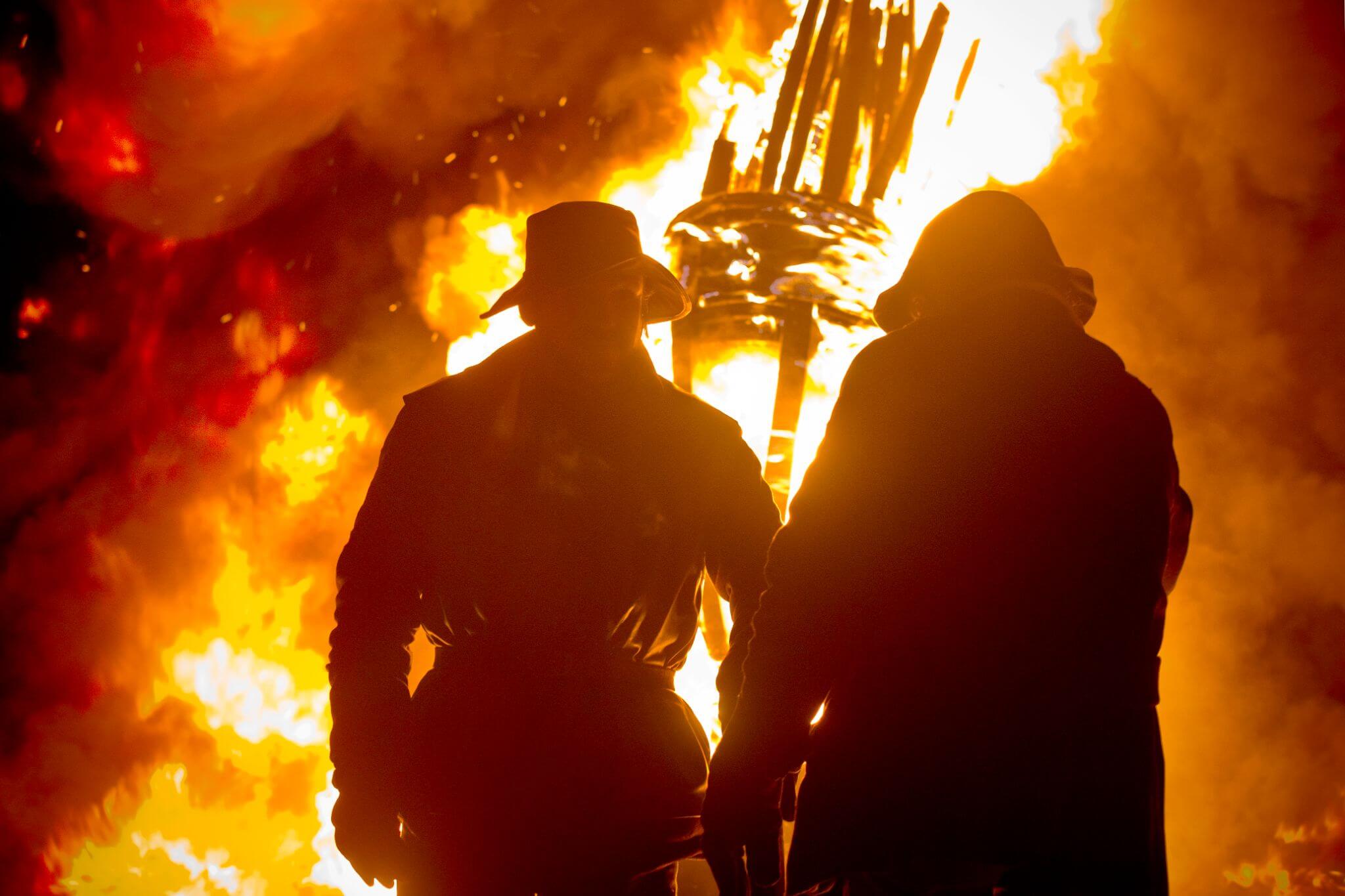
In Stonehaven they really turn up the heat at New Year! One of many winter fire festivals unique to Scotland, the Stonehaven Fireballs parade in Aberdeenshire is a powerful spectacle to behold. It's a free Hogmanay event which has been celebrated for over 100 years and it always attracts a large crowd.

Traditionally, it was a cleansing ritual to burn off any bad spirits left from the old year so that the New Year can begin clean and purified. Watch in awe as the piper leads the procession marching down the street just before midnight as they swing balls of fire above their head in the ultimate test of skill for Stonehaven Hogmanay.

Biggar Bonfire

An enormous pile of wood gradually starts to stack up in Biggar town centre in the final weeks of the year in preparation for the town's own New Year celebration. Lit at 9.30pm on New Year's Eve, Biggar Bonfire sees the welcoming of a New Year by the South Lanarkshire townsfolk in a warm, fiery glow.

Burning of the Clavie

© Scottish Provincial Press / Daniel Forsyth

Drams in Dufftown

Dufftown in Speyside is known as the 'malt whisky capital of the world'. While most of its New Year celebrations are much the same as you would find in small towns and villages up and down the country, it has its own special twist. After the annual Hogmanay ceilidh at a local hotel, the community gathers in The Square where drams of whisky and pieces of shortbread are shared out to see in the bells, courtesy of the local Glenfiddich distillery and Walkers biscuit factory. Slainte!

Burghead's Burning of the Clavie

The residents of Burghead in Moray don't celebrate their New Year on 31 December. Instead, they ignore the Gregorian calendar introduced in the 1750s and continue to celebrate 'old Hogmanay' on 11 January instead. They parade the clavie - a wooden barrel filled with wooden staves - through the town before setting it alight on a nearby hill, leaving it to smoulder well into the next day. The origins of the Burning of the Clavie are subject to debate, but as it takes place later than the official New Year's Eve, it's the perfect excuse to celebrate twice!

Scotland's winter festivals

Find out more on winter events, markets and more in Scotland's eight cities.

Edinburgh Christmas markets and winter festivals

Take to the ice beneath the stars, browse twinkling markets, sip mulled wine, and enjoy dazzling views from the Big Wheel.

Winter festivals

Experience Scotland at the most wonderful time of the year at dazzling, heart-warming winter festivals held across the country.

Everything you need to know about Hogmanay

There are many old Hogmanay rituals and customs that are celebrated in Scotland to this day. The origins of many of them are unknown, but many are believed to bring good luck for the New Year.

A first footer arrives on New Year's Day

Why is the event called Hogmanay?

'Hogmanay' is the Scottish word for the last day of the year, and is associated with New Year's Eve and the celebrations that come with it. It is still unsure where the name originated from, but it is believed the word may have come about during the reign of Mary Queen of Scots and thought to be derived from the French word 'Hoginane' meaning 'gala day'.

What are the main Hogmanay traditions?

  • First-footing - to ensure good luck, the first foot to arrive in your house on New Year's Day should be a dark-haired male (believed to be a throwback to Viking days when blonde strangers arriving on your doorstep meant trouble). The first-footer should also bring symbolic gifts, such as coal, shortbread, salt, black buns or whisky, to ensure good fortune for the year ahead.
  • Clean the house - to begin the New Year with an unclean house is considered bad luck. Houses used to be cleared throughout to welcome the New Year into a tidy and neat house, including taking out the ashes from the fire in the days when coal fires were common.
  • Clear your debts - an old superstition states that you should try to clear all your debts before the stroke of midnight.
  • Sing Robert Burns' Auld Lang Syne after midnight - this custom is a staple of Hogmanay parties across the country (and many countries around the world too!). After the bells at midnight, join in a rousing rendition of Auld Lang Syne to start the New Year in real Scottish style.

What do Scots say at Hogmanay?

At the bells in Scotland, people usually shout 'Happy New Year' before embracing friends and family.

What is the difference between Hogmanay and New Year?

Hogmanay is New Year's Eve (31 December) and New Year is referring to New Year's Day (1 January). Hogmanay celebrations in Scotland often continue into New Year's Day and even to the 2 January.

A Hogmanay performer

Why is Hogmanay so big in Scotland?

Hogmanay has ancient origins in Scotland. Long before the arrival of Christianity, Scots were celebrating the arrival of a new year around the time of the winter solstice (the shortest day), which is technically the 21-22 December, but the arrival of the Romans and their calendars changed this. Plus... who doesn't love a party?!

Did you know?

Robert Burns’ Auld Lang Syne is sung to celebrate the start of the New Year after the stroke of midnight, not just in Scotland but in many English-speaking countries.

The Guinness Book of World Records lists Auld Lang Syne as one of the most frequently sung songs in English.

Listen to it!

Auld Lang Syne

When the clock strikes midnight on Hogmanay, many of us around the world will celebrate by singing Auld Lang Syne. But do you know all the lyrics, or even the meaning of this famous centuries-old folk song? 

Discover what the Scots words in Auld Lang Syne mean, why Robert Burns wrote it and why we all love it so much.

The Statue of Robert Burns, Dumfries

“

We’ll tak a cup o’ kindness yet, for auld lang syne.

Auld Lang Syne's writer, history and how to sing along

Who wrote auld lang syne?

Auld Lang Syne was written down by Robert Burns in 1788 to preserve the Scottish language and culture after Scotland and England had formed the UK in 1707. Burns decided to travel around the country to collect and publish old Scots poetry and songs, so that this bit of Scotland’s spoken history wouldn’t fade from memory. Auld Lang Syne was one of the songs he found and features a mix of Scots and English words.

What does auld lang syne mean?

The title is written in Scots, which is a language similar to English. The latest census in 2011 showed that around 1.5 million Scottish people reported being able to speak Scots fluently. Auld Lang Syne literally translates to "old long since" and is about remembering the good old days.

A Scottish ceilidh

A Scottish ceilidh

© VisitScotland / Stuart McClay

Why is auld lang syne so popular?

The song’s simple and nostalgic melody made it popular at home and abroad. It was adapted as a soul song by Patti Labelle and the Bluebelles, a bluegrass song by Andrew Bird and a rock and roll song by Jimi Hendrix.

Many different countries adapted or translated the lyrics and used it for sentimental events, such as the US Civil War song I wish the war was o’er! or the Dutch football anthem Wij houden van Oranje, in which the singer longs for the team to finally win the Euro Cup. It also appears in some sentimental movie scenes, such as in Wee Willie Winkie (1937), Mr Smith Goes to Washington (1939), It’s a Wonderful Life (1946) and When Harry Met Sally (1989).

What are the lyrics in auld lang syne?

As we prepare to welcome in another year, we wanted to celebrate Hogmanay and Scotland’s unique and endearing culture with you. You might be more familiar with the full English adaptation of Auld Lang Syne by Guy Lombardo if you’re not from Scotland. But now you can sing along with us Scots in the original version, as we’ve given you the sheet music and the full original song so that you can sing along (and know what you’re singing!).

Auld Lang Syne sheet music

Should auld acquaintance be forgot,
and never brought to mind?
Should auld acquaintance be forgot,
and auld lang syne?

For auld lang syne, my jo,
for auld lang syne,
we’ll tak’ a cup o’ kindness yet,
for auld lang syne.

And surely ye’ll be your pint-stowp!
and surely I’ll be mine!
we’ll tak’ a cup o’ kindness yet,
for auld lang syne.

We twa hae run about the braes,
and pou’d the gowans fine;
But we’ve wander’d mony a weary fitt,
sin’ auld lang syne.

We twa hae paidl’d in the burn,
frae morning sun till dine;
But seas between us braid hae roar’d
sin’ auld lang syne.

And there’s a hand, my trusty fiere!
and gie’s a hand o’ thine!
And we’ll tak’ a right gude-willie-waught,
for auld lang syne.

Learn more about Robert Burns' famous poems and songs

The Robert Burns House Museum

Scots words glossary

Here's a handy guide to some of the Scots in the poem to help you understand what you're singing!

Auld lang syne - Old long since/for old times' sake
My jo - My dear
Tak - Take
Ye’ll be your pint-stowp - You’ll buy your pint glass
We twa hae run about the braes - We too have run about the hills
Pou’d the gowans fine - Picked the fine daisies
Mony a weary fitt - Many a weary foot
Sin' - Since 
Paidl’d in the burn - Paddled in the burn / paddled in the stream
Frae morning sun till dine - From the morning sun till dinner time
Braid hae roar’d - But seas between us broad have roared
My trusty fiere - My trusty friend
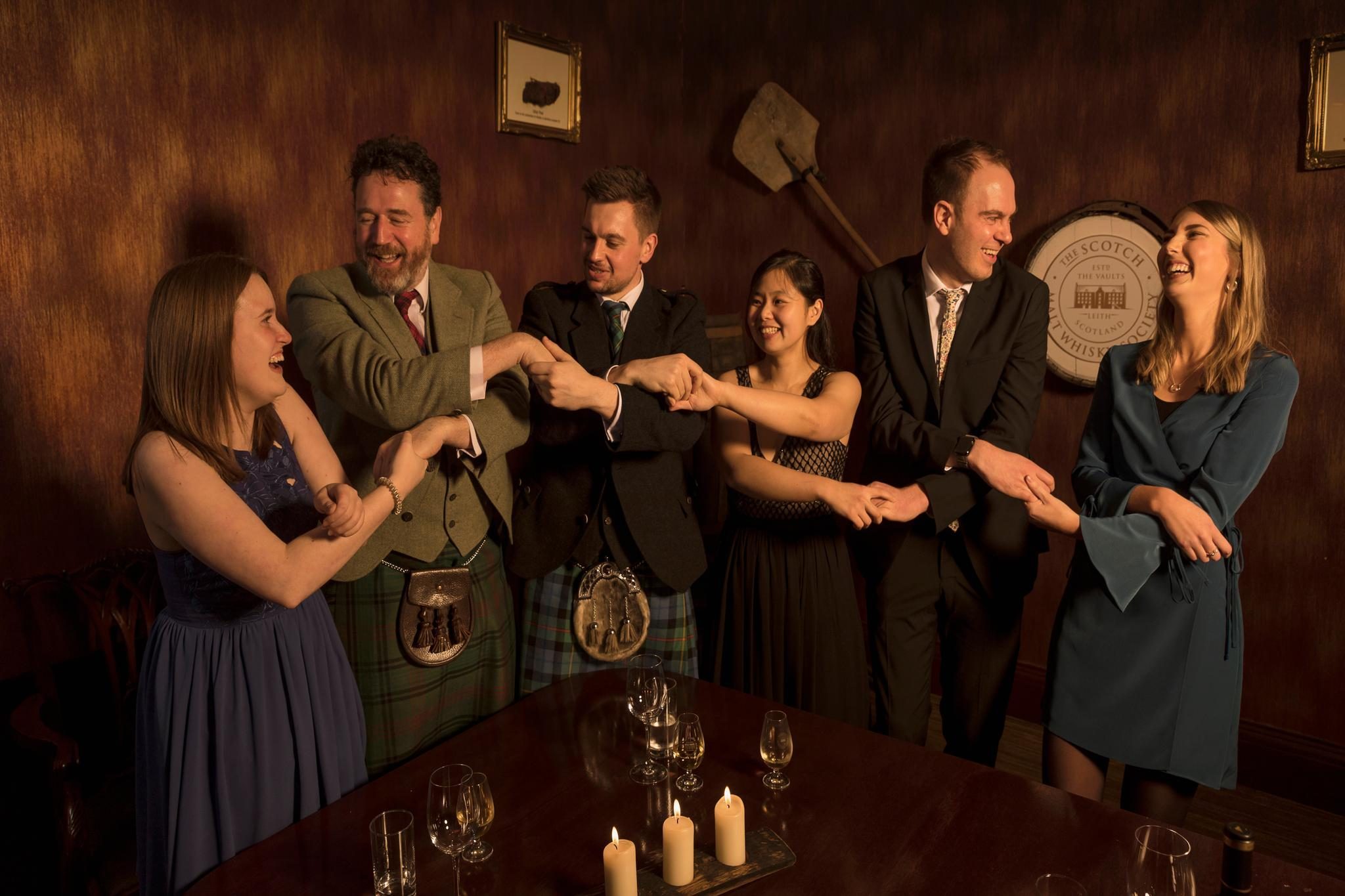
Gie’s a hand o’ thine - Give us a hand of yours (this is a reference to the cross-armed dance you do in a circle at Christmas)
A right gude-willie-waught - Good-will draught / merry sip from a pint

Brush up on your Scots with our coorie words for winter

Things to do in winter

December Breaks in Scotland

Make December a month to remember - book a holiday in Scotland!

January breaks in Scotland

Kickstart the new year with an array of fun activities and events.

February Breaks in Scotland

Plan your February break in Scotland with these fantastic trip ideas.

Share on

Facebook
Pinterest
WhatsApp
Twitter
Email

Other things you might like

Category: Travel & planning

11 Alternative winter activities in Scotland

Category: Travel & planning

Winter & Christmas breaks

Category: Places to go

Scotland's 8 cities

Category: Travel & planning

12 Days of Christmas breaks in Scotland

Category: Travel & planning

Weather in Scotland

Category: Things to do

Events & festivals in Scotland

Join our Newsletter Clan

Get Scotland inspiration direct to your inbox. Don't miss the inside track from our Scotland experts on exciting trip ideas, unique attractions and hidden gems loved by locals.

Get the Scotland newsletter

Get in touch

  • Contact us
  • Feedback & Complaints
  • Submit an event

Our other sites

  • Business Events
  • Business Support Hub
  • Travel Trade
  • Asset library
  • Corporate
  • Scotland is Now

Find us on

Find us on

  • About us
  • Accessibility
  • Acceptable use
  • Cookies
  • Environmental policy
  • Privacy
  • Social media
  • Terms of use
Brand Scotland

© 2026 VisitScotland. All rights reserved.