:

  • English
  • Español
  • Italiano
  • Deutsch
  • Nederlands
  • Français
Navigation generated at 2026-2-7 13:21:10
    • All Places to go

      Cities

      • All Cities
      • Aberdeen
      • Dundee
      • Dunfermline
      • Edinburgh
      • Glasgow
      • Inverness
      • Perth
      • Stirling

      Popular Places

      • Ben Nevis
      • Glencoe
      • Loch Lomond
      • Loch Ness

      Towns

      • All Towns
      • Aviemore
      • Dumfries
      • Fort William
      • Kirkwall
      • Lerwick
      • Oban
      • Peebles
      • Pitlochry
      • St Andrews

      Islands

      • All Islands
      • Isle of Arran
      • Isle of Islay
      • Jura
      • Lewis & Harris
      • Mull
      • Orkney
      • Outer Hebrides
      • Shetland
      • Skye

      Regions

      • Aberdeen & Aberdeenshire
      • Argyll & The Isles
      • Ayrshire & Arran
      • Dumfries & Galloway
      • Dundee & Angus
      • Edinburgh & The Lothians
      • Fife
      • Glasgow & Clyde Valley
      • Loch Lomond, Trossachs, Stirling & Forth Valley
      • Highlands
      • Perthshire
      • Scottish Borders
    • All Things to do

      Attractions

      • All Attractions
      • 20 Top Attractions
      • Ancestry
      • Arts & Culture
      • Castles
      • Free Attractions
      • History & Heritage
      • Museums & Galleries
      • Rainy Days
      • TV & Film Locations

      Outdoor Activities

      • All Outdoor Activities
      • Cycling
      • Fishing
      • Golf
      • Horse Riding
      • Mountain Biking
      • Sailing
      • Ski & Snowsports
      • Walking & Hiking
      • Watersports

      Food & Drink

      • All Food & Drink
      • Beer & Breweries
      • Gin Tours & Tastings
      • Whisky & Distilleries

      Landscapes & Nature

      • All Landscapes & Nature
      • Beaches
      • Ben Nevis
      • Lochs
      • National Parks
      • Northern Lights
      • Standing Stones
      • Wildlife Watching

      Tours, Routes & Trails

      • All Tours, Routes & Trails
      • Islands & Island Hopping
      • Itineraries
      • Scotland's UNESCO Trail
      • Tours
      • Walking Trails

      Events

      • All Events
      • Edinburgh's Summer Festivals
      • Highland Games
      • Music Festivals
    • All Accommodation

      Hotels & Lodgings

      • B&Bs & Guesthouses
      • Budget Hotels
      • Hostels
      • Hotels
      • Luxury Hotels
      • Restaurants with Rooms & Inns

      Caravan & Camping

      • All Caravan & Camping
      • Campervan, Motorhome & Caravan Holidays
      • Glamping
      • Wild Camping

      Self Catering

      • All Self Catering
      • Cabins & Lodges
      • Cottages
      • Flats & Apartments
      • Hot Tubs
      • Large Groups

      Unique Places

      • All Unique Places
      • Boats, Barges & Boathouses
      • Brochs & Blackhouses
      • Castles
      • Churches

      Other Accommodation

      • Accessible Accommodation
      • Eco Accommodation
      • Exclusive Use Venues
      • Luxury Accommodation
      • Pet Friendly Accommodation
      • Romantic
      • Wedding Venues
    • All Travel & planning

      Travel to Scotland

      • From England & Wales
      • From Europe
      • From Ireland
      • From North America
      • From Other Continents

      Travel in Scotland

      • Air
      • Bus & Coach
      • Ferry
      • Train

      Driving in Scotland

      • All Driving in Scotland
      • Car Hire
      • Driving Routes
      • Electric Vehicles

      When to visit

      • All When to visit
      • Spring & Easter
      • Summer Breaks
      • Autumn Breaks
      • Winter, Christmas & New Year

      Practical Information

      • Eco-Travel
      • FAQs
      • Holiday Carbon Calculator
      • Passes & Offers
      • Passports & Visas
      • Weather

      Ideas & Advice

      • Outdoor Safety Information
      • Travel Blog
      • Travel Newsletter

      Holiday Types

      • Accessible Holidays
      • Beauty Spots
      • Budget-Friendly Holidays
      • Countryside Breaks
      • Family Holidays
      • Farm Stays
      • Off the Beaten Track Holidays
      • Solo Travel
      • Weekend Breaks
      • Wellness Retreats
  • Map of Scotland

BETA: The search and map are new features with further enhancements planned. VisitScotland is not responsible for the content of external links and accepts no liability for any reliance on these.

Your feedback will help improve the site
  1. Home
  2. Things to do
  3. Attractions
  4. Arts & Culture
  5. Our Scottish languages - dialects and phrases

Our Scottish languages - dialects and phrases

Scotland’s most prominent language by usage is English – or our distinct version of it, but did you know that it is not the only language spoken in Scotland today? Thanks to our rich history and vibrant culture, we have three official languages: Scottish English, Scots and the original Celtic language of Gaelic.

National Library of Scotland

National Library of Scotland

© VisitScotland / Phil Wilkinson

Get to know Scotland's languages

English and Scots serve as the primary languages for most daily communication, while Gaelic is frequently encountered across certain regions and communities. Let’s delve a little bit deeper to understand the differences between the native Scottish languages. 

Scottish Standard English

Scottish Standard English (SSE) is the national standardised variety of Global English, and it has been Scotland’s main language since the 18th century.

Dunfermline Carnegie Library & Galleries

“

“Surely our language is the image of our soul.”

William Soutar

Background

It varies from the Standard English of England, which is often referred to as ‘RP (Received Pronunciation) English’ or ‘The Queen’s English’, in the way that it’s packed with a range of uniquely Scottish traits that make it stand apart from English spoken in other parts of the UK, and elsewhere in the world.  

Unique features

Scottish Standard English encompasses a range of unique accents, words, grammar, and sayings.  

Once you're in Scotland you'll notice that the Scots speak with short, sharp vowels sounds, as well as 'r' sounds having a harsh pronunciation. One thing that you will surely come across, is the distinctive ‘ch’ sound that you can hear in words such as ‘loch’ or ‘broch’, as well as place names such as ‘Kinloch Rannoch’. 

Many words used in Scottish English derive from the Scots and Gaelic languages; some, like ‘dram’, ‘ceilidh’, or ‘sporran’, the SSE speakers are often not aware that they are using vocabulary that is specific to Scotland. On the other hand, words such as ‘bonnie’, ‘bairn’, ‘blether’, ‘braw’, ‘coorie’ or ‘peellie-wallie’ are far more conscious choices of Scottish English.

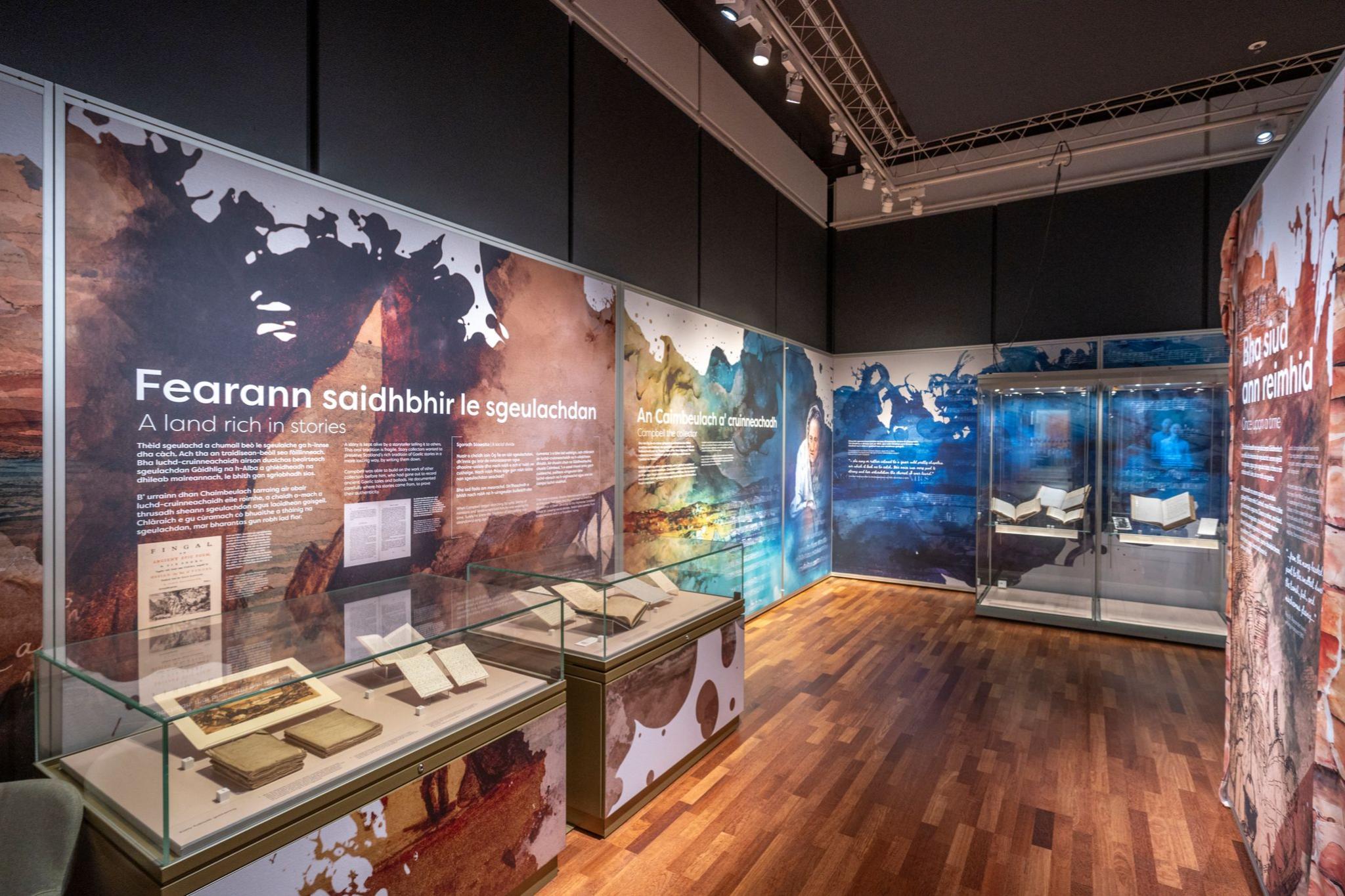
The National Library of Scotland

The Scots language

The Scots language is not really a variety of English, but rather it’s considered a ‘sister’ language of Scottish English since they both came from Anglic (aka Old English).

Background

According to the 2011 census, it is estimated that around 1.5 million Scottish residents can speak or understand the Scots language in some capacity. What’s also interesting is that it’s primarily a spoken language, and currently, Scots is not taught or used in schools in any form. 

You might come across names like Broad Scots or Lowland Scots – these are simply names for the Scots language, with the words broad and lowland added to help differentiate the Scots from Gaelic. 

Edinburgh International Book Festival

© © VisitScotland / Kenny Lam

Regional dialects 

The Scots language is divided into four main Scots dialects, and it’s characterised by a much harder pronunciation. 

  • Insular Scots – spoken in the islands of Orkney and Shetland. This dialect is heavily influenced by Scandinavian countries, and its origins go back to the 1400s. Today, it’s the Scots dialect furthest sounding from English. 
  • Northern Scots – primarily spoken in the north east of Scotland, including the city of Aberdeen. It’s recognised by the noticeable use of an ‘f’ sound in place of the ‘w’ sound. 
  • Central Scots – the widest spoken Scots dialect, heard in the central belt of Scotland, including Edinburgh and Glasgow, and it’s probably the closest sounding to Global English. 
  • Southern Scots – also called Borders Scots, or simply Borders, due to the location in which it is spoken, which is close to the border between England and Scotland. Its differentiating feature from other Scots dialects is its vowel sounds, where long ‘oo’ sounds more like ‘ow’.

To make things just a ‘tad’ bit (a little bit) more complicated, each of the Scots dialects can be further divided into other dialects, like Doric (spoken in Aberdeen only), Glaswegian (spoken only in Glasgow), or Shetlandic (spoken only in the Shetland islands).   

Did you know? 

Historically, the Scots language has been attributed to the working classes and Standard Scottish English with the upper classes. What you may observe here, is Scots speakers code-switching, meaning they will revert to Standard Scottish English e.g. in an office environment or at school, but use Scots when speaking with their friends over a ‘wee swallie’ (a quick drink) at the pub! 

Leakey's Bookshop, Inverness

© @bean_nighe

Gaelic

Gaelic, the ancient tongue of Scotland, is thought to be the founding language of Scotland that originates from Ireland.

Background

It’s significant within certain regions and communities, such as the Outer Hebrides and the Highlands, and is frequently encountered on travels in Scotland e.g. at road signs, or town and place names. 

It was once spoken across the country, from cities to islands to rural areas, however following the Highland Clearances that resulted in a mass emigration from Scotland, the government gradually replaced Gaelic with Scots and then English.

Find out more about the Gaelic language   

Learn Gaelic language online 

Useful information about Scottish languages

10 Gaelic place names & their meanings

Discover Scottish Gaelic place names and their meanings. Including Glasgow, the Black Isle, Galloway, Beauly and more!

18 Braw Scottish words & their meanings

Learn to speak like a local with these great Scottish words, their meanings and how they sound.

10 Tricky Scottish place names and how to pronounce them

With this list you’ll get the hang of these 10 tricky Scottish place names in next to no time!

12 Guid Doric phrases & their meanings

Learn how to speak like a local with these Doric words and their meanings.

Coorie words for winter in Scotland

Find out which coorie words in Gaelic, Scots and Doric have a winter connection in Scotland. Including words such as unbrak, flukra, flin and more!

Scotland's top 10 Scots poems for Burns Night

To celebrate all things Scots language, we surveyed 1,000 Scottish adults to see exactly what their favourite Scots poems are.

Share on

Facebook
Pinterest
WhatsApp
Twitter
Email

Other things you might like

Category: Places to go

History of Vikings in Scotland

Category: Things to do

Scottish arts & culture

Category: Things to do

Thistle - national flower of Scotland

Category: Things to do

Tartan and kilts

Category: Places to go

Scotland's islands

Category: Things to do

Scottish architecture

Join our Newsletter Clan

Get Scotland inspiration direct to your inbox. Don't miss the inside track from our Scotland experts on exciting trip ideas, unique attractions and hidden gems loved by locals.

Get the Scotland newsletter

Get in touch

  • Contact us
  • Feedback & Complaints
  • Submit an event

Our other sites

  • Business Events
  • Business Support Hub
  • Travel Trade
  • Asset library
  • Corporate
  • Scotland is Now

Find us on

Find us on

  • About us
  • Accessibility
  • Acceptable use
  • Cookies
  • Environmental policy
  • Privacy
  • Social media
  • Terms of use
Brand Scotland

© 2026 VisitScotland. All rights reserved.